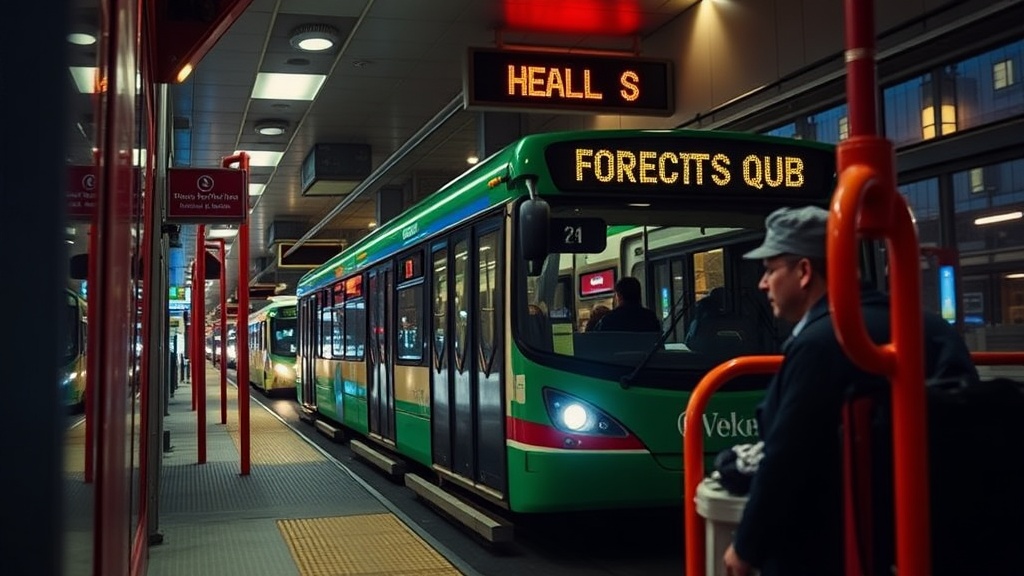
How to Make the Most of Saint John Transit — Without the Usual Headaches

What Do I Need to Know Before Riding Saint John Transit?
Picture this: it's a Tuesday morning in January, the fog's rolling off the Bay of Fundy thicker than usual, and your car won't start in the driveway on Sandy Point Road. You need to get to work downtown by 8:30 AM, and your usual ride is out of commission. For thousands of Saint Johners, this isn't a hypothetical — it's the exact moment when understanding our city's bus system becomes more than just convenient. It becomes necessary.
Saint John Transit operates 28 routes across the city, connecting the Peninsula, the North End, Millidgeville, and the sprawling East Side. The system's been running since 1979, and while it doesn't have the frequency of Halifax or Moncton, it gets the job done when you know how to work with it. The key is understanding that this isn't Toronto or Vancouver — our buses run on their own schedule, and trying to fight that reality only leads to frustration at the bus shelter outside Market Square.
Where Can I Find Real-Time Bus Information in Saint John?
Here's the first thing locals learn the hard way: the printed schedules at the King's Square transit terminal are often outdated the moment they're printed. Construction on Union Street, a sudden detour around the Reversing Falls Bridge, or a late-running shift change at the Irving Pulp & Paper Mill can throw everything off.
The Transit app (available on iOS and Android) has become the unofficial bible for regular riders. It pulls GPS data directly from the buses, showing you exactly where your ride is — not where the schedule says it should be. Download it before you need it. The app's particularly useful during Saint John's infamous fog delays, when visibility drops to nothing and buses crawl along the Golden Mile Drive at half their normal speed.
For those without smartphones, the transit information line at 506-658-4700 still operates during business hours. The operators are Saint John locals who actually know the difference between Lancaster Mall and McAllister Place — and they'll tell you straight up if the 1A is running fifteen minutes behind because of traffic at the Harbour Bridge.
How Much Does It Cost to Ride, and Where Do I Buy Passes?
As of early 2025, a single cash fare on Saint John Transit runs $3.25 — exact change only, because the drivers don't handle bills or make change. That's the kind of detail that catches tourists off guard at the terminal behind City Hall, but locals know to keep a jar of quarters by the door or invest in a monthly pass.
The monthly pass ($78 for adults, $62 for seniors and students) pays for itself if you're riding more than 24 times a month — basically, daily commuting plus weekends. You can buy passes at the transit office in the City Market building on Charlotte Street, at the Customer Service desk at McAllister Place on the East Side, or at various convenience stores around town. The Petro-Canada at the corner of Rothesay Avenue and Millidge Avenue keeps them in stock, as does the Needs on Main Street North.
University of New Brunswick Saint John students ride free with their student ID — it's included in tuition fees. Saint John High School and Harbour View High students get discounted monthly passes through their schools. If you're a senior, don't forget to apply for the reduced fare card; you'll need proof of age and a photo ID, but the savings add up quickly over a year of errands to the Superstore on Fairville Boulevard.
Which Routes Actually Matter for Daily Life?
Not all routes are created equal in Saint John. The 1A and 1B lines run the Golden Mile corridor — that's your backbone route connecting McAllister Place, the mall area, through Uptown past the Imperial Theatre, and out toward the shopping district on the West Side. These buses run every 20-30 minutes during weekday hours, which is about as frequent as it gets here.
The 15 route serves Millidgeville and the university, packed with students heading to campus from their apartments on Sandy Point Road or their parents' homes in the suburbs. The 31 and 32 cover the North End — critical if you're trying to get from the Indiantown neighborhood to the Regional Hospital without a car. The 12 serves the East Side sprawl, winding through shopping plazas and residential neighborhoods that were built in the 1980s when everyone assumed you'd have two cars in the driveway.
Saturday service is reduced across the board — some routes don't run at all, and others switch to hourly schedules. Sunday service is even more limited. Plan accordingly if you're trying to get to the Saint John City Market on Sunday morning for your weekly shopping; the 1A runs, but it's not going to match your timeline if you're in a hurry.
What About the Connection to Outlying Areas?
Here's where Saint John Transit gets complicated. The city limits stop at Rothesay town line, but plenty of people commute in from Quispamsis, Grand Bay-Westfield, or Rothesay itself. The Saint John Transit website maintains a detailed map of service boundaries, but the short version is: if you live in the Kennebecasis Valley, you're dealing with Maritime Bus connections, not city transit.
That said, there is a regional connection. The 60 Express runs from McAllister Place to Quispamsis during rush hours — it's a partnership route that costs a bit more ($4.50) but saves you the headache of driving across the Reversing Falls Bridge twice a day. It's popular with commuters who work at the hospital or the courthouse and live in the valley suburbs.
For those heading toward Grand Bay-Westfield, the connection is less elegant. You'll need to catch a Maritime Bus at the terminal behind the City Market — they run a commuter service that aligns somewhat with business hours, but it's not the kind of thing you can rely on for spontaneous trips. Check the Maritime Bus schedule if this applies to your situation.
What Should I Avoid When Riding Saint John Transit?
Peak hours on the 1A — between 7:30-8:30 AM and 4:30-5:30 PM — are standing-room-only affairs. If you've got mobility issues or simply hate being pressed against strangers, adjust your schedule by twenty minutes either direction. The same bus at 9:00 AM is a completely different experience.
Don't assume buses run on holidays. Saint John Transit operates a Sunday schedule on most statutory holidays, and some routes shut down entirely. Boxing Day is particularly thin — many drivers take vacation, and management struggles to fill shifts. Check the holiday schedule on the city's transit page before making plans.
Finally, remember that Saint John is a small city with small-city habits. Drivers often know their regular passengers by name. They'll wait an extra minute if they see you running for the stop outside the Canada Games Aquatic Centre. They'll tell you when your stop is coming up if you're new to the route. Treat them with respect, and they'll look out for you — that's just how things work here.
Riding the bus in Saint John isn't always glamorous. The seats are vinyl, the heating can be temperamental in February, and yes — sometimes you'll wait longer than the schedule promises. But when your car's in the shop, or gas prices spike, or you simply don't want to deal with parking at the Imperial Theatre for a show, knowing how to navigate this system puts you back in control. It's a skill worth having, even if you only use it once in a while. In a city built on hills and fog, having options matters.